
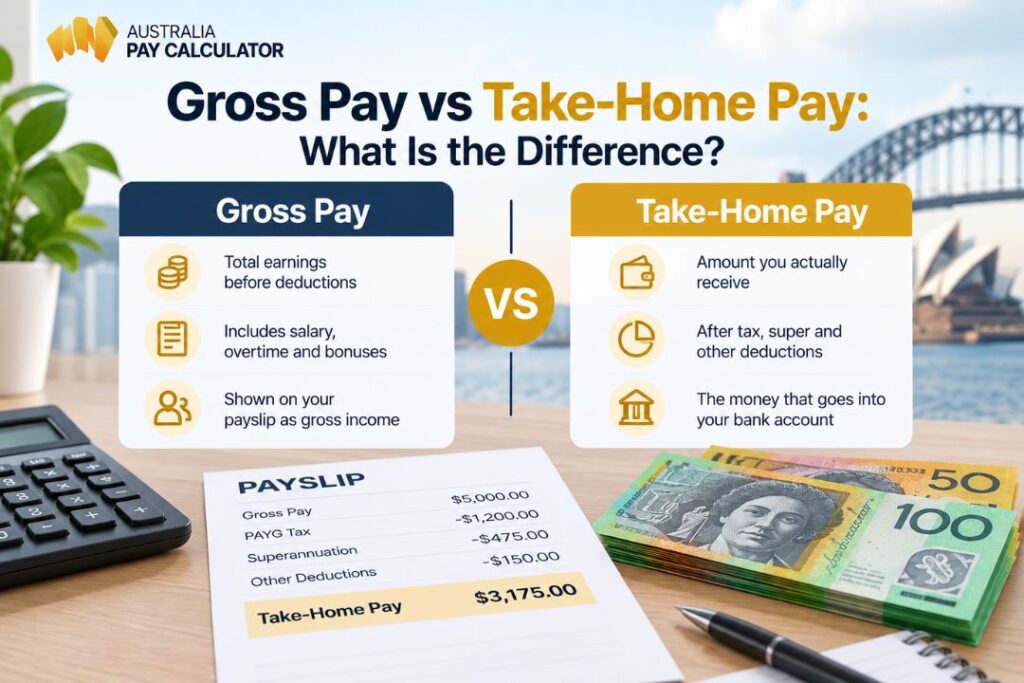
The salary you earn on paper is often higher than the amount that reaches your bank account.
Gross pay is your earnings before tax and other deductions are taken out. Take-home pay is what remains after those amounts are removed. It is also commonly called net pay.
This difference matters when you check a job offer, read your payslip, or work out how much money you will actually receive each payday.
The easiest way to understand it is to look at what each figure includes and what happens between gross pay and the final amount paid to you.
Gross Pay vs Take-Home Pay at a Glance
The main difference is simple: gross pay comes before deductions, while take-home pay comes after them.
| Gross Pay | Take-Home Pay |
| Earnings before deductions | Earnings after deductions |
| Also called gross earnings | Also called net pay |
| Usually the higher figure | Usually the lower figure |
| Includes eligible earnings for the pay period | Amount normally paid into your bank account |
| Starting amount before tax is withheld | Final amount after applicable deductions |
Australian employers must show both gross and net pay on employee payslips, according to Fair Work Ombudsman.
What Is Gross Pay?
Gross pay is the total amount you earn before tax and other deductions are removed.
For a salaried worker, it is based on the salary agreed with the employer. For an hourly worker, gross pay depends on the number of hours worked and the pay rates that apply.
Your gross earnings may include:
- Base salary or ordinary wages
- Overtime
- Penalty rates
- Bonuses
- Commissions
- Allowances
- Other paid entitlements
For example, if you earn $1,400 in ordinary wages and another $200 in overtime during the same pay period, your gross pay is $1,600.
This figure shows how much you earned before payroll deductions. It does not tell you exactly how much will reach your bank account.
What Is Take-Home Pay?
Take-home pay is the amount left after applicable tax and other deductions have been taken from your gross earnings. It is also known as net pay.
The basic calculation is:
Gross pay – tax and other deductions = take-home pay
Suppose your gross fortnightly pay is $2,500 and a total of $500 is withheld or deducted. Your take-home pay would be $2,000.
That $2,000 is usually the amount deposited into your bank account.
Take-home pay can differ between employees even when their salaries look similar. This is because tax withholding and other payroll deductions depend on individual circumstances.
Why Is Take-Home Pay Lower Than Gross Pay?
Take-home pay is usually lower because some amounts are withheld or deducted before your employer pays you.
For Australian employees, these may include:
- PAYG tax withholding
- Study or training loan withholding where applicable
- Salary sacrifice arrangements
- Employee-authorised deductions
- Other deductions allowed under workplace laws
PAYG withholding is one of the main differences between gross and take-home pay. Employers withhold the required tax from salary and wage payments and pay it to the Australian Taxation Office.
The amount withheld can depend on factors such as your income and the information you provide through your tax declaration.
Fair Work also limits when employers can deduct other amounts from employee wages. Some deductions require written authorisation, while othears may be allowed under legislation, an award, an agreement, or another legal arrangement.
Superannuation works differently. Employer super contributions are generally paid into your super fund rather than deducted from your normal take-home pay.
However, salary offers can be written as salary plus super or as a total package including super. Check which one applies when comparing job offers because the same advertised figure can represent a different base salary.
Gross Pay vs Take-Home Pay Example
A simple example shows where the difference appears.
Suppose an employee is paid fortnightly:
| Pay Detail | Amount |
| Ordinary wages | $2,600 |
| Overtime | $200 |
| Gross pay | $2,800 |
| PAYG withholding | $500 |
| Other authorised deduction | $50 |
| Take-home pay | $2,250 |
The employee earned $2,800 before anything was removed. This is their gross pay.
A total of $550 was then withheld or deducted, leaving $2,250. That final amount is their take-home pay.
The example is only for explanation. Actual tax withholding can vary based on income and personal circumstances.
If you want to check your own figures, the take-home pay calculator can estimate how an annual salary translates into daily, weekly, fortnightly, monthly, and annual net pay.
Where Can You Find Gross and Take-Home Pay on a Payslip?
Your payslip shows how your earnings move from gross pay to the final amount you receive.
When checking it, look for:
- Gross pay: your earnings before deductions
- Tax withheld: the amount withheld through PAYG
- Other deductions: any additional amounts taken from your pay
- Net pay: your final take-home amount
- Super: employer contributions shown separately where required
For example, if your gross pay is $2,800 but your bank account receives $2,250, the tax and deduction entries on your payslip should explain the $550 difference.
This also makes your payslip useful when checking whether your hours, overtime, bonuses, deductions, and final payment have been recorded correctly.
Frequently Asked Questions
Is take-home pay the same as net pay?
Yes. Take-home pay and net pay generally mean the same thing. Both refer to the amount left after applicable tax and other deductions have been removed from your gross earnings before payment reaches you.
Can two people with the same gross salary receive different take-home pay?
Yes. Their final pay can differ because tax withholding, study loan obligations, salary sacrifice arrangements, and authorised deductions may vary. The same gross salary, therefore, does not always result in the same net payment.
Does overtime increase gross pay and take-home pay?
Overtime generally adds to your gross earnings when you are entitled to overtime pay. It may also increase your take-home pay, although tax withholding can rise because your total earnings for that period are higher.
Conclusion
Gross pay is the amount you earn before tax and other deductions, while take-home pay is the amount left after those amounts are removed. Gross pay helps you understand your total earnings, while take-home pay shows what you actually receive.
The difference usually comes from PAYG withholding and any other deductions that apply to your situation. Your payslip should clearly show how one figure becomes the other.
To estimate what a salary may mean for your own pay cycle, use the Australia Pay Calculator to compare gross income with estimated weekly, fortnightly, monthly, or annual take-home pay.